

Metronome 4/4 Practice tools Questions App Store Get the app Google Play

Practice log

Built like an instrument.

A precise metronome with a full practice studio behind it: trainers that make the click harder on purpose, sessions you can plan, and a beat that holds from the first bar to the last. Free, no advertising, no account.

42minutes practised
14hours in total
9day streak

An example entry. Your own practice time and streak are recorded on your device.

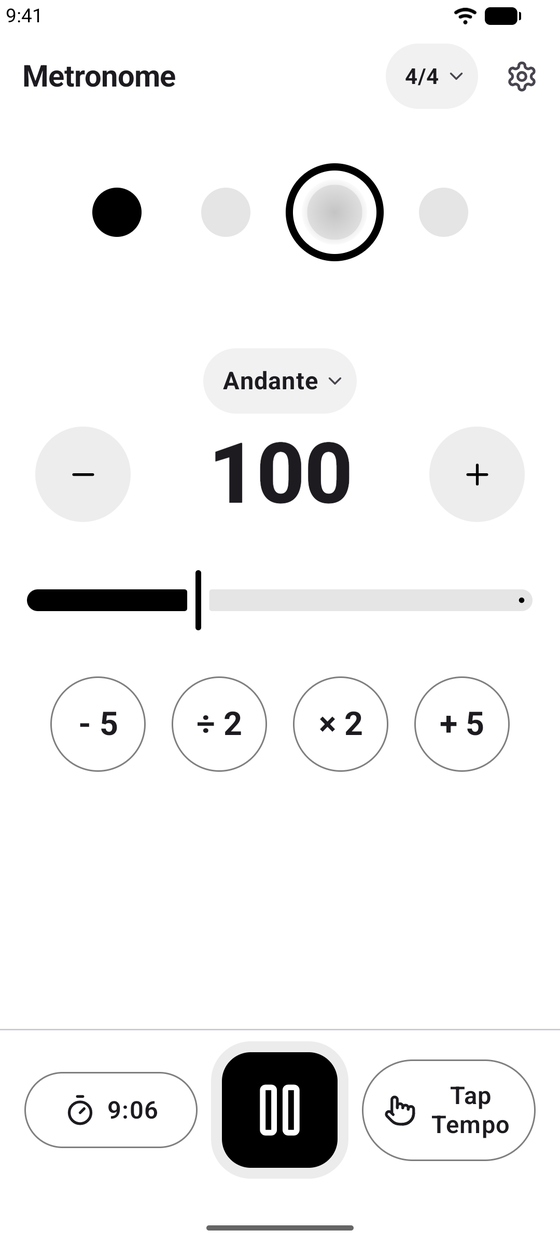
The metronome screen running at 100 BPM in 4/4, marked Andante: four beat dots with the first accented, the tempo slider and fine steps, and a bottom bar holding a 9:06 timer, pause, and tap tempo.

The click

A beat that holds.

Set the tempo, tap it in, or shape it bar by bar. Every beat can be accented or muted, and the pulse is scheduled against a monotonic clock, so it does not wander as a session runs long.

  • Tempo range40 to 220 BPM
  • Time signatures2/43/44/45/46/87/8
  • SubdivisionsQuarterEighthsTripletsSixteenths
  • Per beatAccentNormalMute
  • Click soundsWoodClickClassic

40 BPM220 BPM

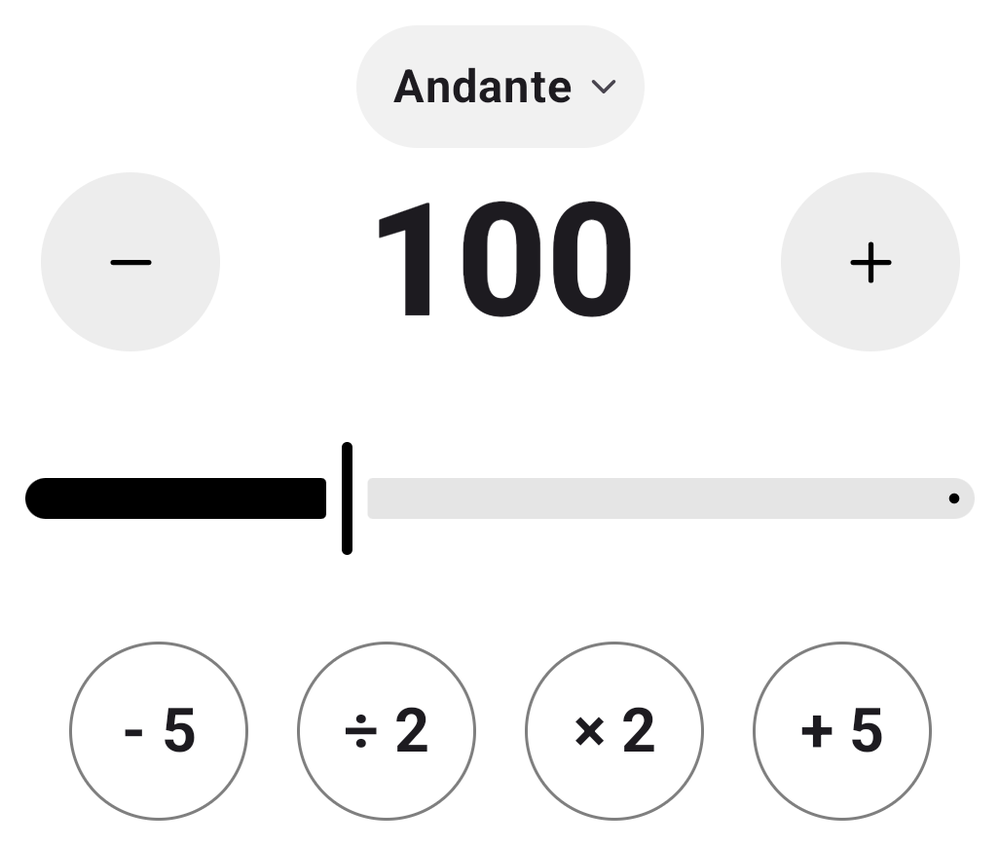
The tempo cluster: an Andante marking pill above 100 BPM, minus and plus buttons either side, the tempo slider, and the minus 5, halve, double and plus 5 shortcuts.
The tempo cluster: marking, BPM, fine steps and the slider.

The silence

Count through the gaps.

The Gap Trainer plays a set number of bars, then goes quiet for a set number while the beat keeps counting underneath. You hold the pulse yourself, and find out whether you are still with the click when it comes back. It is the most direct way to train an internal clock.

The Gap Trainer running, with a status strip reading Muted, bar 2 of 2, over a 4 plus 2 bar cycle.
The status strip while the Gap Trainer is muted: bar 2 of 2 of a 4 plus 2 bar cycle.

The climb

Take it up two at a time.

Give the Tempo Trainer a start, a target, a step and how many complete bars to hold, and it moves the tempo for you while you play. A passage travels from careful to performance speed without you stopping to change the number.

  • Example climb80 to 120 BPM
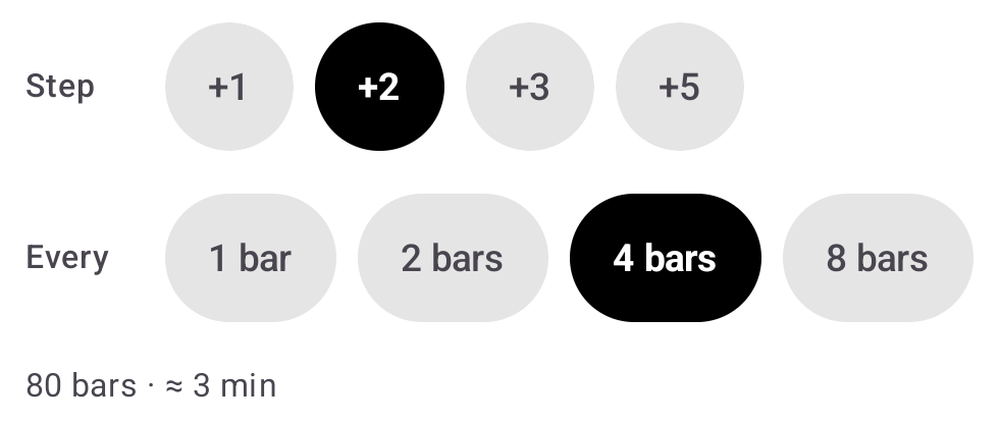
  • Step+2 every 4 bars
  • Length80 bars, about 3 minutes
The Tempo Trainer's step controls, with a step of plus 2 selected and held every 4 bars, summarised underneath as 80 bars or about 3 minutes.
A climb configured to step +2 every 4 bars: 80 bars, about 3 minutes.

The session

Plan it once, follow it after.

Save a whole setup as a preset: tempo, meter, subdivision, accents and count-in. Then order those presets into a practice set, giving any step a time or bar goal. You decide when to move on; nothing advances behind your back.

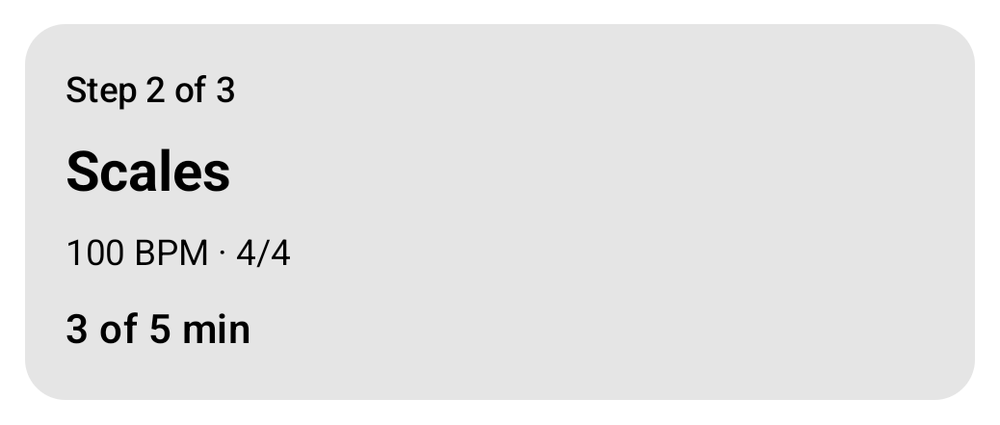
A practice session card reading step 2 of 3, Scales, 100 BPM in 4/4, three of five minutes done.
Step 2 of 3 of a saved practice set, three of five minutes done.

Yours

No advertising. No account.

Nothing sits behind a subscription and nothing asks you to sign in. Core practice works offline, your settings and practice time stay on your device, and playback keeps running with the screen off — always on iPhone, on Android once Background Play is on.

  • PriceFree
  • AccountNot required
  • Core features offlineYes
  • AppearanceLight and dark, five colour schemes
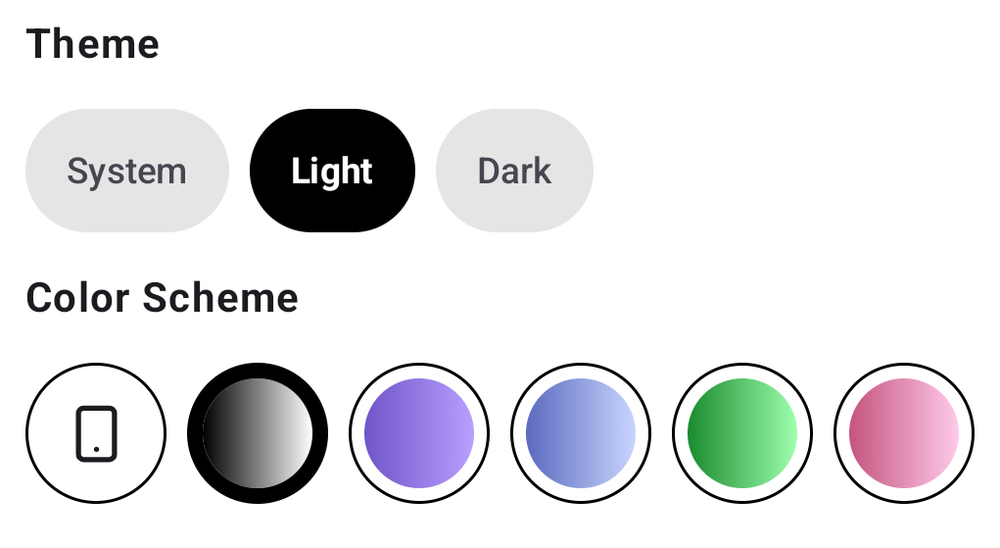
The appearance settings, with Theme set to Light alongside System and Dark, above a row of colour scheme swatches.
Theme and colour scheme, both stored on your device.

Before you install

Hear it in this browser.

The same app, compiled to WebAssembly and running as a web page. Every screen and every trainer is here, but nothing you set or save survives a reload. The installed app is still the one that keeps your presets, can play with the screen off and can vibrate on the beat.

Needs a recent browser: Safari 18.2 or newer, Chrome 119, Firefox 120.

Questions

What is a gap trainer?

The gap trainer plays a set number of bars, then goes silent for a set number of bars while the beat keeps counting. You keep time yourself through the silence and find out whether you are still with the click when it returns. It is the most direct way to train your internal pulse.

How does gradual tempo practice work?

Set a starting tempo, a target tempo, a step size and how many complete bars to hold before each step. The Tempo Trainer then moves the BPM for you while you play, so you can take a difficult passage from slow to performance tempo without stopping to change the number.

What is the difference between a preset and a practice set?

A Practice Preset is one saved setup — tempo, time signature, subdivision, per-beat accents and mutes, and count-in. A Practice Set is an ordered sequence of those presets, where any step can carry a time or bar goal. Presets are what you play; sets are how you work through a session.

Does it work offline?

Yes. The core practice features work without a network connection, and there is no account to create. Settings and practice activity are stored on your device.

Does it keep playing in the background?

On iPhone, yes: playback continues with the screen off or another app in front, and on supported iPhones the current tempo and practice timer also appear on the Lock Screen and in the Dynamic Island. On Android, turn on Background Play in Settings first — until you do, playback stops when you leave the app.

Is the web version the same as the app?

It is the same app: the browser version is built from the same Kotlin and Compose code, compiled to WebAssembly, and runs the same beat scheduler. The installed app still has the advantage on a phone, because it can keep playing with the screen off, supports haptics and Live Activities, and remembers your presets and practice sets between sessions.

Tomorrow's entry

Leave yourself something to write down.

Free, with no advertising and no account. Install it, set a tempo, and the log fills itself in.